How Do You Design Inclusive PPE for Every Body on the Automotive Line?
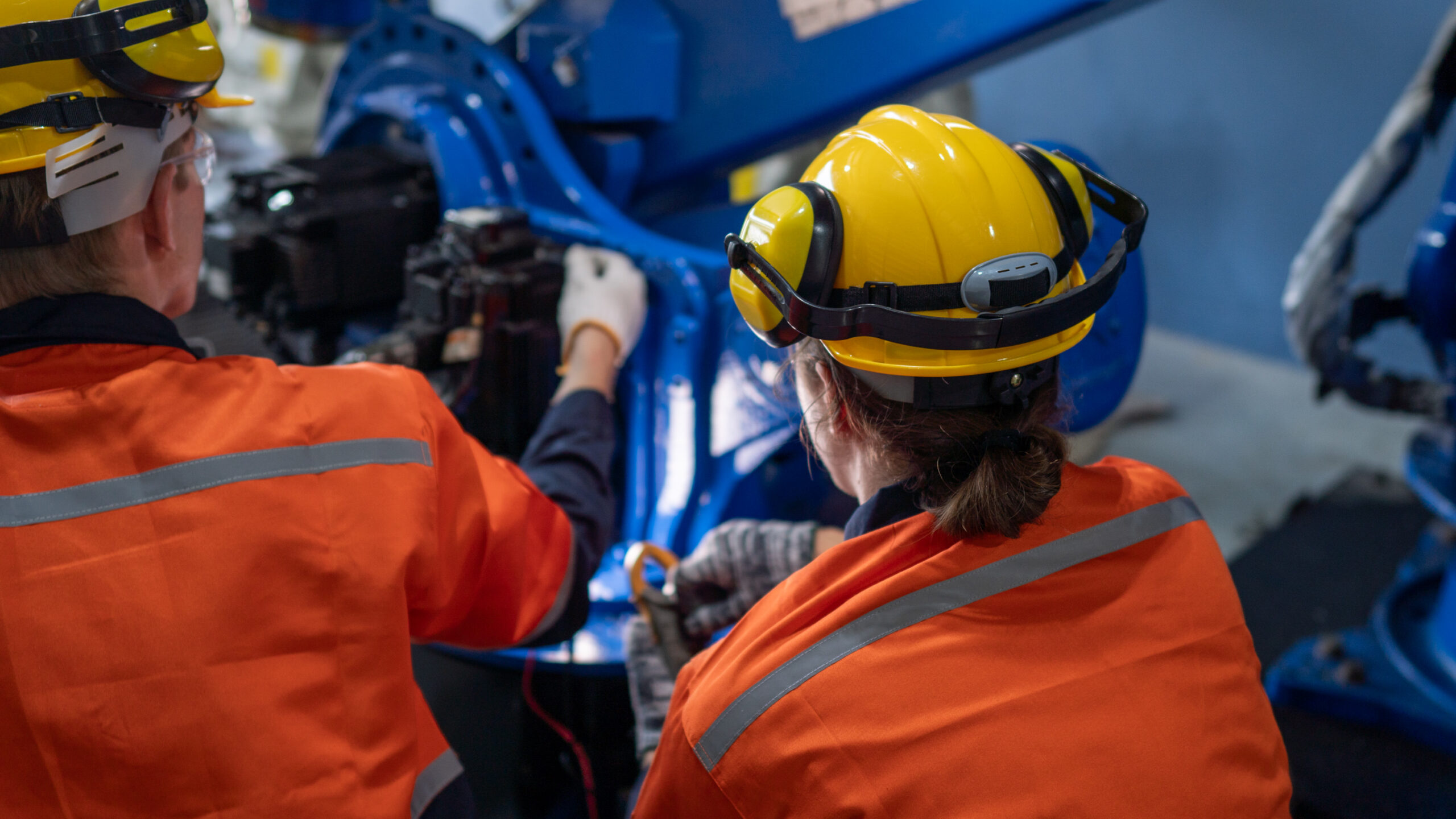
On an automotive production line, two people can be doing exactly the same job but need very different fits from their protective clothing.
One worker may struggle with sleeves that are too long. Another may find that standard gloves restrict their grip. Someone else may need a different trouser cut, footwear width or protective layer to work comfortably through a shift.
These aren’t simply matters of personal preference. When protective equipment fits poorly, it can interfere with movement, create additional hazards or prevent the equipment from working as intended.
Inclusive PPE is protective equipment selected and provided to suit the different body shapes, sizes, abilities and cultural needs of the people who wear it. In automotive manufacturing, it must also fit the individual, remain compatible with other equipment and protect against the hazards of their particular job.
Designing inclusive personal protective equipment (PPE) means recognising those differences from the beginning. It requires an understanding of the work, the people doing it and the protection each task demands.
For automotive manufacturers, the aim is to give every worker access to protective equipment that fits properly, works with their other equipment and remains suitable throughout their working day.
Why Inclusive PPE Matters on the Automotive Production Line
Automotive manufacturing brings together a wide range of jobs, movements and working conditions. A worker fitting interior components has different requirements from someone handling body panels, working in a paint facility or moving materials around the factory.
Even within the same department, workers have different heights, proportions, abilities and physical requirements.
A single standard pattern or limited size range cannot be assumed to accommodate everyone.
Consider a production worker who spends much of their shift reaching into vehicle bodies. Protective clothing that pulls across the shoulders or bunches around the waist can make those movements harder. Equally, excess fabric around machinery can introduce an entanglement risk.
The Health and Safety Executive (HSE) advises employers to consider the physical characteristics of the wearer, together with the size, fit, weight and compatibility of the PPE they select.
This makes inclusive fit an important part of workplace safety, not an optional addition to the uniform brief.
However, fit is only one part of the decision. Employers must first assess the hazards, control risks through appropriate workplace measures and establish what protective equipment is required. A comfortable garment is not necessarily protective, and ordinary branded workwear must never be treated as a substitute for certified PPE.
Start with the Different Jobs People Actually Do
An inclusive PPE programme begins on the production floor, where clothing and equipment must work around real tasks.
Rather than selecting one range and distributing it across every department, look at the conditions and movements involved in each role.
| Automotive work area | Practical PPE and fit considerations |
| Assembly and component fitting | Reaching, bending, kneeling, grip, dexterity and clothing that stays secure around equipment |
| Body-shop and fabrication | Appropriate protection against task-specific hazards, with fit that does not introduce snagging or restrict movement |
| Paint and finishing | Chemical exposure, protective clothing, respiratory equipment and compatibility between all required items |
| Materials handling and internal logistics | Visibility where required, footwear fit, movement and protection appropriate to vehicle and handling risks |
| Quality inspection | Freedom to move around vehicle interiors and exteriors, with PPE selected for the actual inspection environment |
The necessary protection must be established through each task’s risk assessment. Not every department will require the same equipment.
This is where wearer observation becomes valuable.
Watching how someone works can reveal things that a clothing specification cannot. Does a sleeve ride up when they reach overhead? Does a fastening catch when they enter a confined space? Can they handle small components confidently in the gloves provided?
Understanding those details helps establish what works, what needs changing and where an alternative approved product or fit is required.
Inclusive Fit Means More Than Offering Additional Sizes
Expanding a size range is useful, but it doesn’t automatically make PPE inclusive.
Two people wearing the same nominal size may have different shoulder widths, arm lengths, waist proportions or body shapes. Scaling one pattern up or down doesn’t resolve every difference.
A better approach considers the fit options available across the workforce.
Design for Different Body Shapes
Women’s PPE should not automatically be a smaller version of clothing originally designed around men’s proportions.
Equally, gender-neutral options should provide genuine choice rather than relying on a single supposedly universal fit.
Depending on the type of equipment and its approved specifications, suitable options could include different garment cuts, leg lengths, proportions and manufacturer-approved adjustments.
Gloves and footwear deserve the same attention. A glove that is too large can interfere with dexterity, while footwear that is the correct length but too narrow may still be unsuitable.
The objective isn’t to give everyone identical clothing. It’s to make sure everyone has access to equipment appropriate for their body and the work they perform.
Consider Disability, Pregnancy and Changing Wearer Needs
Inclusive PPE must also accommodate people whose physical requirements change or who need different ways of wearing or adjusting equipment.
Your selection and assessment process should consider:
- Pregnancy and changing body shapes: Pregnancy can change garment fit over time. Employers need to review both the suitability of protective equipment and the wider risks associated with the work.
- Disability and reduced mobility: Different physical abilities may affect how equipment is put on, fastened or worn. Alternative approved fits and fastening arrangements may help meet individual needs.
- Religious and cultural requirements: Head coverings and other clothing requirements must be considered where they interact with protective equipment, including head protection and respiratory equipment.
- Menopause-aware workwear: Temperature sensitivity and comfort can influence the suitability of everyday workwear and additional clothing layers, particularly in physically demanding or temperature-controlled environments.
- Neurodiversity-aware design: Fabric feel, pressure points, seams and fastening preferences can affect wearer comfort. These considerations are particularly useful when developing accompanying workwear and uniforms.
These considerations must always sit alongside the protective requirements of the equipment. Where an adaptation could affect safety, the answer is to find an appropriately approved alternative, not to alter certified PPE without authorisation.
A choice of properly specified fits and garment options gives employees greater scope to find clothing that works for them, without compromising the requirements of their role.
Check How Different Pieces of PPE Work Together
A protective item can fit correctly on its own and still create problems when worn with other equipment.
Safety glasses, hearing protection, respiratory equipment, head protection and clothing may all need to be worn together. Their interaction matters.
For example, safety glasses can interfere with the seal of a tight-fitting respirator. Additional clothing layers may affect the fit of outer protective garments, while head protection and hearing protection must remain compatible.
Workers should therefore assess the complete combination of equipment they use, not simply each item separately.
Respiratory protection requires particular care. The HSE’s respiratory protective equipment guidance explains that tight-fitting facepieces require face fit testing by a competent person.
This is a formal safety process and must not be confused with ordinary garment wearer trials.
In automotive paint operations, requirements can be especially specialised. For example, the HSE specifies air-fed breathing apparatus for spraying isocyanate paints because filtering respirators are unsuitable for that exposure.
The message is straightforward: inclusive design must work within the required level of protection, not compromise it.
Involve the People Who Wear the Equipment
Employees are often the first to recognise when workwear or PPE isn’t working properly.
They know which garments restrict movement, which sizes are consistently unavailable and which equipment combinations make everyday tasks unnecessarily difficult.
Bringing those experiences into the selection process helps employers identify issues before a wider rollout.
At JSD, wearer research and trials form part of our uniform design process. We look at what people do during their working day, how clothing fits and where practical improvements are needed.
Our work with Laing O’Rourke is an example of that process. In this construction-sector programme, six wearer trials across several locations involved more than 50 people in developing an inclusive workwear range, including clothing designed specifically around women’s fit.
For automotive employers, an effective wearer assessment should reflect the variety of people, duties and working conditions within the factory.
That means involving workers across different sizes, body shapes, roles and shifts, rather than relying only on a small sample of volunteers.
Feedback should move beyond whether someone likes a garment. Ask whether they can bend, reach, grip, move and perform their duties with the selected equipment in place.
Where the equipment is safety-critical, the relevant specialist assessments, certification requirements and formal fit-testing procedures must also be completed.
What Does BS 30417:2025 Mean for Inclusive PPE?
The publication of BS 30417:2025, Provision of Inclusive Personal Protective Equipment (PPE) – Guide, has brought greater attention to the way employers select, issue and manage protective equipment for diverse workforces.
The British Standards Institution’s guidance provides a framework for making PPE provision more inclusive, recognising that workers have different physical characteristics and individual requirements.
It encourages employers to consider whether people can obtain equipment that fits and functions correctly, rather than treating the availability of standard sizes as proof that everyone has been accommodated.
For automotive manufacturers, this provides a useful starting point for reviewing purchasing policies, fitting arrangements, workforce consultation and ongoing access to suitable protection.
Importantly, BS 30417 is guidance on inclusive PPE provision. It is not a product performance certification and does not replace the technical standards, conformity requirements or workplace risk assessments applicable to specific protective equipment.
An inclusive purchasing policy and a technically suitable PPE specification need to work together.
Make Inclusive Fit Part of Ongoing PPE Management
Even a well-considered range can become less inclusive if people struggle to obtain the correct replacements.
A worker might receive a suitable garment during an initial fitting but find that only a different size or model is available several months later.
This is why the ordering and replacement process matters just as much as the original selection.
Your programme should account for the actual range of sizes and fits required across departments, not just the most frequently ordered sizes.
It should also provide clear ways to request alternatives, report uncomfortable or unsuitable equipment and replace damaged items.
Changes in an employee’s needs may require a new fitting or assessment. A change in job duties can also mean the original protection is no longer appropriate.
For certified PPE, inspection, maintenance, cleaning and replacement must follow the manufacturer’s instructions and the employer’s safety procedures. Unauthorised repairs or alterations must never compromise protective performance.
Alongside this, the wider uniform and workwear programme benefits from accurate sizing information, planned stockholding and straightforward ordering.
When those arrangements work well, employees have a better chance of obtaining the clothing they need without repeatedly working around poor fit or limited availability.
Where Does Uniform Design Fit Alongside Protective Equipment?
Automotive businesses often manage more than one type of clothing within the same workforce.
Production teams may need specialist PPE. Other operational staff may wear durable workwear, while supervisory, administrative and customer-facing colleagues require a different uniform specification.
These elements can form part of a coordinated workforce clothing programme, but they shouldn’t be treated as technically interchangeable.
At JSD, we bring together wearer research, garment design, development, suitable stock-supported options and ongoing uniform management. We look at how clothing needs to perform for your people, how it represents your brand and how it can be supplied as your workforce changes.
Our experience in managed transport uniform programmes reflects the importance of designing around different working roles while maintaining a consistent approach to brand identity, ordering and supply.
For automotive production environments, that means understanding the relationship between ordinary workwear and the specialist PPE specified by your health and safety team.
The technical protective requirements remain the responsibility of the employer, supported by appropriately competent safety professionals and PPE specialists.
A coordinated approach allows your organisation to consider fit, comfort, role requirements and brand consistency without compromising the distinction between workwear and protective equipment.
Better Protection Begins with Understanding the Wearer
Designing inclusive PPE for an automotive production line isn’t about creating one garment that somehow fits everybody.
It’s about understanding the different people carrying out the work and ensuring each can access properly fitting, suitable protection.
That requires role-specific risk assessments, appropriate protective specifications, genuine wearer involvement and a practical system for providing and replacing equipment.
For automotive employers reviewing their wider workwear and uniform programme, we can help bring wearer needs, role-specific design and ongoing supply into the conversation.
Talk to our team about creating automotive workwear and managed uniform programmes that fit your people, your brand and the jobs they do.
More Articles

Why Should ESD Workwear Start With the Wearer, Not the Spec Sheet?
When you’re specifying ESD workwear for an automotive team, it’s easy to focus on fabric performance, resistance measurements and technical standards. They’re essential, of course. But there’s another important consideration: the people who’ll be wearing the garments every day. Think about a technician assembling sensitive vehicle electronics. They may spend hours seated at a workstation, […]
How Do You Keep Uniforms for One Hotel Brand Consistent Across Every European Market? A Guide to Hotel Uniforms
You keep one hotel brand consistent across European markets by locking the elements guests recognise, controlling local adaptation through approved options and managing hotel uniforms across their full working life. A guest arriving at your Copenhagen hotel should recognise the same brand they experienced in Barcelona, even when employees dress differently for the climate. The […]
Is Your Hotel Uniform Ready for the EU’s New Sustainability Rules? A Guide to Sustainable Hotel Uniforms
Hotel uniforms are ready for new EU sustainability rules when each garment is backed by product-level data on fibre composition, sourcing, durability and end-of-use, so hotel groups that build this evidence now will be best placed as CSRD, ESPR and the Digital Product Passport take effect. A hotel uniform contract may look operational, but it […]
Can Better Uniforms Improve Hospitality Staff Retention? The Role of Hospitality Uniforms in Employee Experience
Better hospitality uniforms can support staff retention by removing a daily source of friction, although pay, progression, management and workload also shape labour turnover. A hotel employee may spend an entire shift adjusting a restrictive waistband, coping with excess heat or working without the pockets needed for basic tasks. That makes the question “Can Better […]
Do Your Guests Judge Your Brand Before They Reach the Front Desk? How Hotel Uniforms Shape First Impressions
The Guest Experience Starts Before Reception The guest experience starts at the kerb, the entrance or the first staff interaction, well before check-in. Every step of the arrival sequence shapes brand perception before a guest reaches the front desk, and hotel uniforms are one of the most visible parts of that sequence. Guests start forming […]

What Does a Uniform Programme Say About a Retailer’s Sustainability Commitments?
A Uniform Programme Is Evidence of How a Retailer Operates A uniform programme shows whether a retailer’s sustainability commitments work in practice or exist only as policy. When stores span several regions, uniforms become a recurring test of whether corporate sustainability policies work in everyday operations. Judging that means looking beyond sustainable uniforms to the […]
